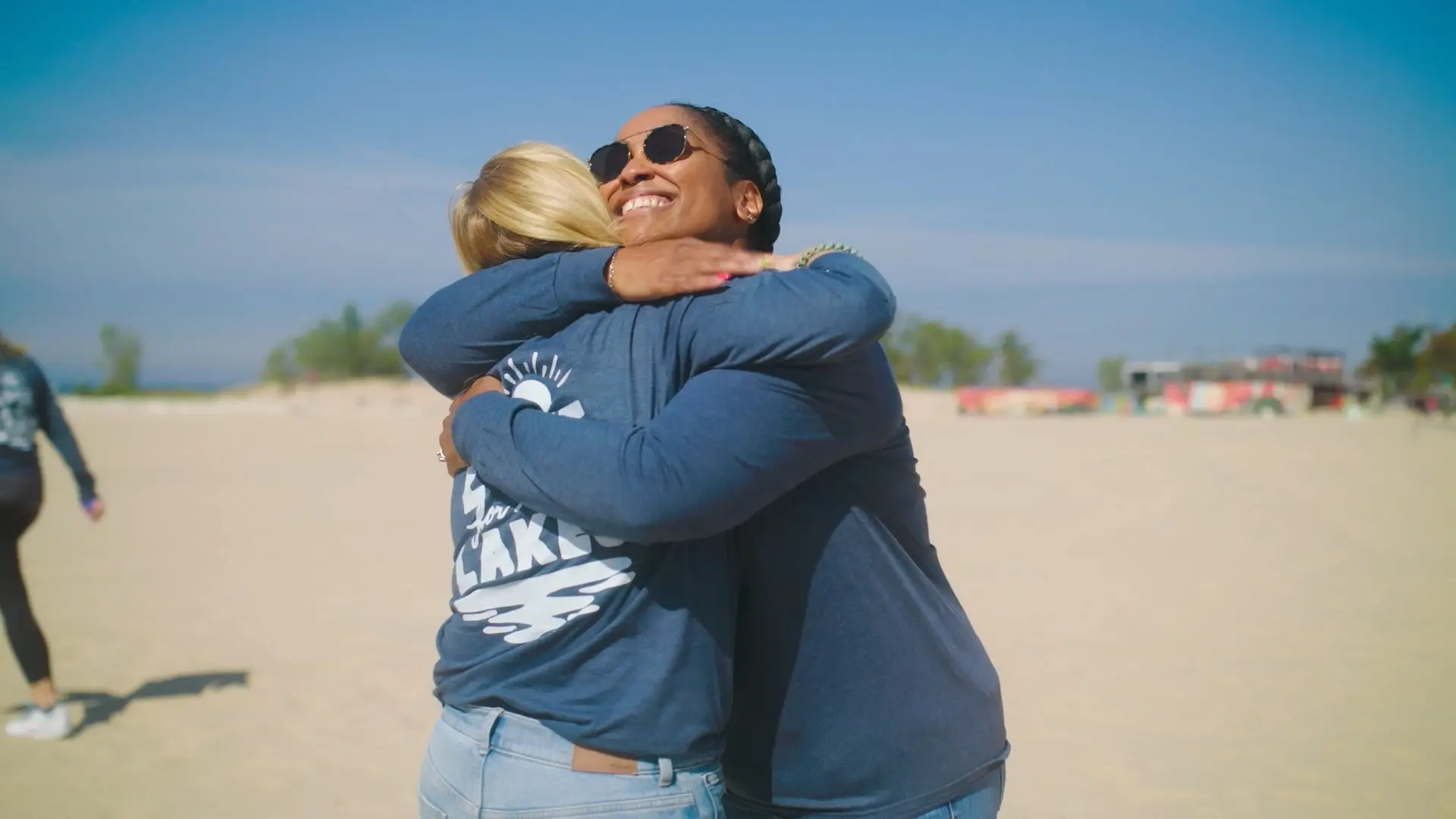
Unilever and Meijer Beach Cleanup Video Case Study: CSR Storytelling on Michigan Beaches
SALT partnered with WPP Unite to document the August 12, 2025 Unilever and Meijer Beach Cleanup across Grand Haven and Pere Marquette, turning a $10,000 grant and the removal of micro-plastics into a human CSR video case study with no corporate fluff.
On August 12, 2025, SALT partnered with WPP Unite to document the Unilever and Meijer Beach Cleanup across Grand Haven State Park and Pere Marquette Beach. In a two-hour live window, we captured seven perspectives, macro detail of micro-plastics being removed from the sand, and the human reason a $10,000 grant to the Alliance for the Great Lakes mattered in the first place.
- →We mapped two beaches and seven voices before the first camera rolled so a two-hour live window still felt coherent.
- →Macro "sieve" shots turned invisible micro-plastic pollution into something viewers could actually understand.
- →A dedicated sound workflow let us pull clean interviews even with sand-restoration machinery roaring nearby.
- →One fast shoot produced a CSR proof piece that could work for Unilever, Meijer, WPP Unite, and internal stakeholders without feeling corporate.
Quick Proof
Brands that need CSR proof, community-impact storytelling, or event documentary coverage that still feels human under pressure.
Proof for event video production and documentary storytelling.
- Service this proves
- CSR video case study and documentary-style event storytelling
- Problem SALT solved
- Prove a sustainability effort was real, local, and worth caring about without falling back on corporate recap language.
- Outcome
- Two Michigan beaches covered, seven perspectives captured, and a $10,000 grant tied to visible on-the-ground action.
- What SALT delivered
- A two-location live capture plan, seven interview perspectives, macro micro-plastic detail, and a fast-turn hero film built for multiple stakeholders.
2
Beach Locations
7
Interview Perspectives
$10,000
Community Grant
2 Hours
Live Window
The Full Story
The Challenge
Impact should not be boring.
That sounds obvious, but a lot of sustainability storytelling still dies inside decks, recap PDFs, and polished little summaries nobody actually feels. Unilever, WPP Unite, and Meijer did not need another safe proof-of-attendance video. They needed something that could show real action on August 12, 2025 and make the work feel immediate.
The live constraints were not cute. We had two beaches, a two-hour production window, seven different voices to capture, and a story problem that shows up in almost every cleanup campaign: from far away, people picking up trash can all blur together. If we did not find a sharper visual language, the whole thing risked feeling like a corporate photo op instead of a real environmental effort.
Our Approach
We did not treat this like a generic event recap. We treated it like a fast field documentary with a very specific job: turn a community cleanup and a $10,000 grant into something people could see, trust, and remember.
We Built the Day Before We Shot It
Our Bucking Creative model only works when prep is heavy. Before the first camera powered on, we mapped both beaches, identified the seven priority subjects, and knew where the story had to move: context, action, proof, and human stakes. That planning is how a two-hour live window becomes enough instead of a panic.
We Focused on the Human Side of the Data
Groups of people in matching shirts do not carry a story by themselves. We kept the camera close to hands, faces, sand, and movement so the cleanup felt physical instead of abstract. The best move of the day was the sieve shot. By getting macro detail of tiny plastic fragments and bottle caps being filtered from the sand, we turned the invisible problem into something the audience could understand immediately.
That one visual did a lot of work. It explained the "why" behind the grant better than a paragraph ever could.
We Engineered Calm in a Loud Environment
The beach itself fought back. Annual sand restoration meant heavy machinery and constant engine noise were running right next to our interview zones. That is where a calm crew matters more than a fancy speech. We kept a dedicated sound workflow in play, stayed patient, and used pro-level audio isolation so the voices still came through clean even when the environment was doing its best to wreck the moment.
We Built One Piece to Serve More Than One Team
This was never just a sizzle reel. The final structure had to work for WPP Unite's retail marketing goals, Unilever's CSR communication, and Meijer's regional partnership visibility all at once. That is the sweet spot for this kind of production: one story, multiple jobs, no fake feeling.
The Impact
The finished piece gave the team something stronger than a recap. It gave them proof with texture. You can feel the beaches, the movement, the people, and the reason the day mattered beyond a headline. The story makes room for beauty, but it does not duck the grit.
It also made the environmental impact legible. Showing volunteers is nice. Showing the actual micro-plastics being pulled from the sand is better. That is what turned the cleanup from a nice brand moment into a real CSR video case study.
The client response told us we hit the mark. James Avant at Unilever wrote, "I LOVE the storytelling here!" Kristin Schillaci followed with, "Amazing as always! I have no additional feedback other than thank you for your continued partnership." That kind of response matters because it means the work felt true without losing polish.
If you want to see the field conditions for yourself, we also staged a short behind-the-scenes clip from the cleanup day.
For broader context, this story pairs naturally with the Alliance for the Great Lakes and Unilever's sustainability work.
Related SALT service
This project supports our event video production and documentary storytelling work because it shows how live community impact, stakeholder interviews, and social-ready documentary footage can come from one tightly planned shoot without feeling staged.
Frequently Asked Questions
Why make a CSR video case study instead of just sending photos or a PDF recap?
Because people trust what they can see. A strong CSR video case study turns impact from a claim into evidence by showing the people, the place, and the work in motion.
How did SALT capture a live event with only two hours to work?
We front-loaded the work. Both beaches were mapped in advance, the interview list was locked, and we knew which visual beats had to carry the story before the first battery came out of the case.
What made this beach cleanup story feel different from a typical corporate recap?
We did not lean on logos or generic feel-good coverage. We built the story around human perspective, tactile environmental proof, and the kind of visual detail that made the cleanup feel real.
What was the biggest production challenge on this project?
Noise. Heavy sand-restoration machinery was operating right next to our interview areas, so clean audio took patience, gear, and a crew that did not get rattled when conditions got messy.
What is the sieve shot and why did it matter so much?
It is the close-up moment where tiny micro-plastics and bottle caps are filtered from the sand. That shot made the environmental problem visible and gave the whole film a stronger reason to exist.
Can one sizzle reel really serve multiple stakeholders?
Yes. This one was built to support WPP Unite's retail storytelling, Unilever's CSR communication, Meijer's community partnership visibility, and internal proof from the same production day.
Is there a behind-the-scenes video from this production?
Yes. We staged a short behind-the-scenes clip from the beach cleanup day so you can see the lean crew, the beach conditions, and the kind of field reality this shoot had to move through.
Where is SALT based?
We are a woman-owned creative video company based in Grand Rapids, Michigan. We make documentary, event, and branded work with grit, clarity, and enough range to help serious messages actually land.
- →We mapped two beaches and seven voices before the first camera rolled so a two-hour live window still felt coherent.
- →Macro "sieve" shots turned invisible micro-plastic pollution into something viewers could actually understand.
- →A dedicated sound workflow let us pull clean interviews even with sand-restoration machinery roaring nearby.
- →One fast shoot produced a CSR proof piece that could work for Unilever, Meijer, WPP Unite, and internal stakeholders without feeling corporate.
“I LOVE the storytelling here!”
Behind the Cleanup
These BTS stills show what the polished cut does not always reveal at first glance: heavy machinery nearby, a lean crew moving fast, and the kind of field conditions that force you to stay calm if you want the story to stay human.
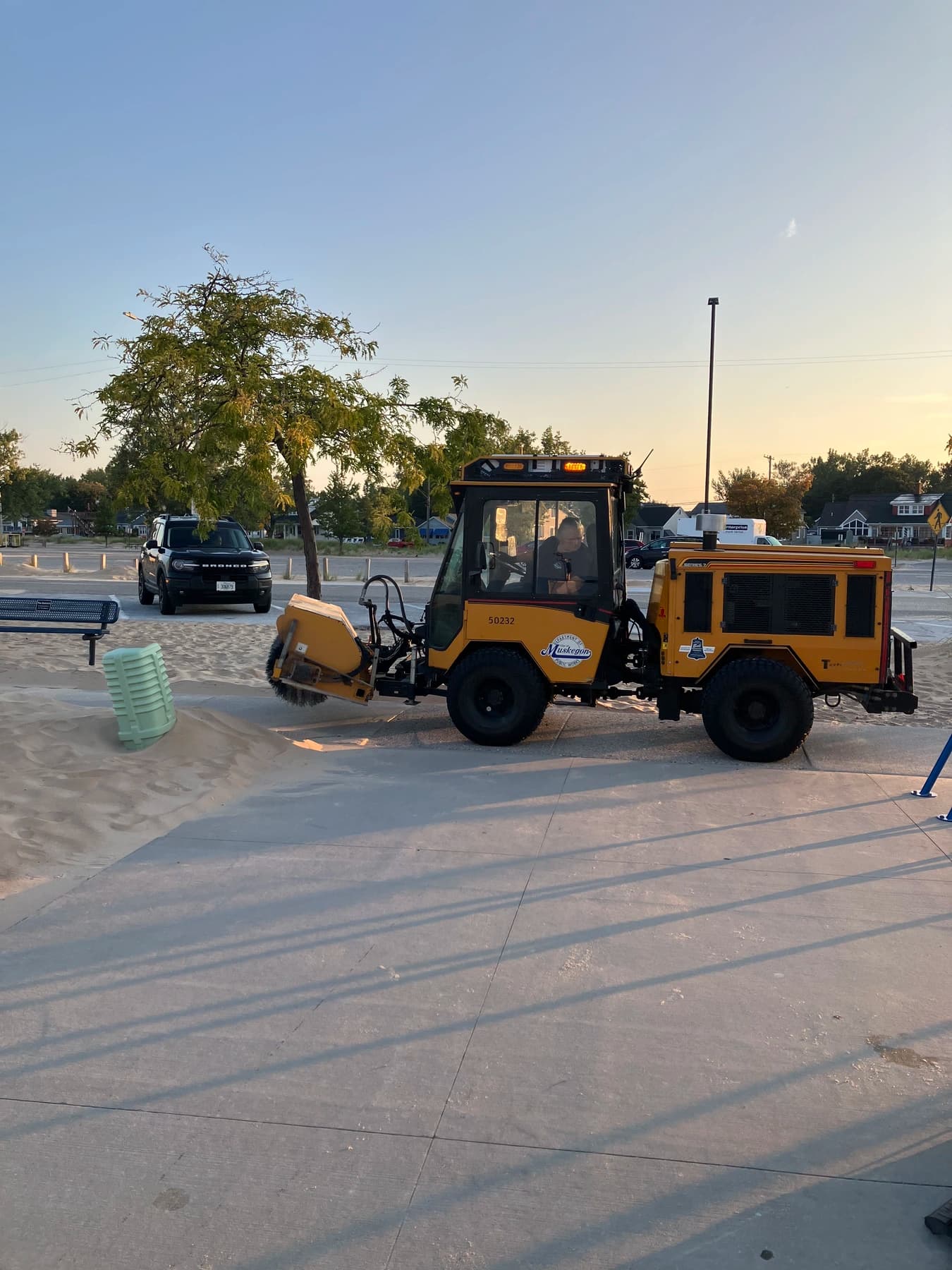
NOISY NEIGHBOR
Sand restoration equipment was running right next to our interview zones. That is the kind of real-world chaos you do not get to complain about on a live shoot. You solve it and keep moving.
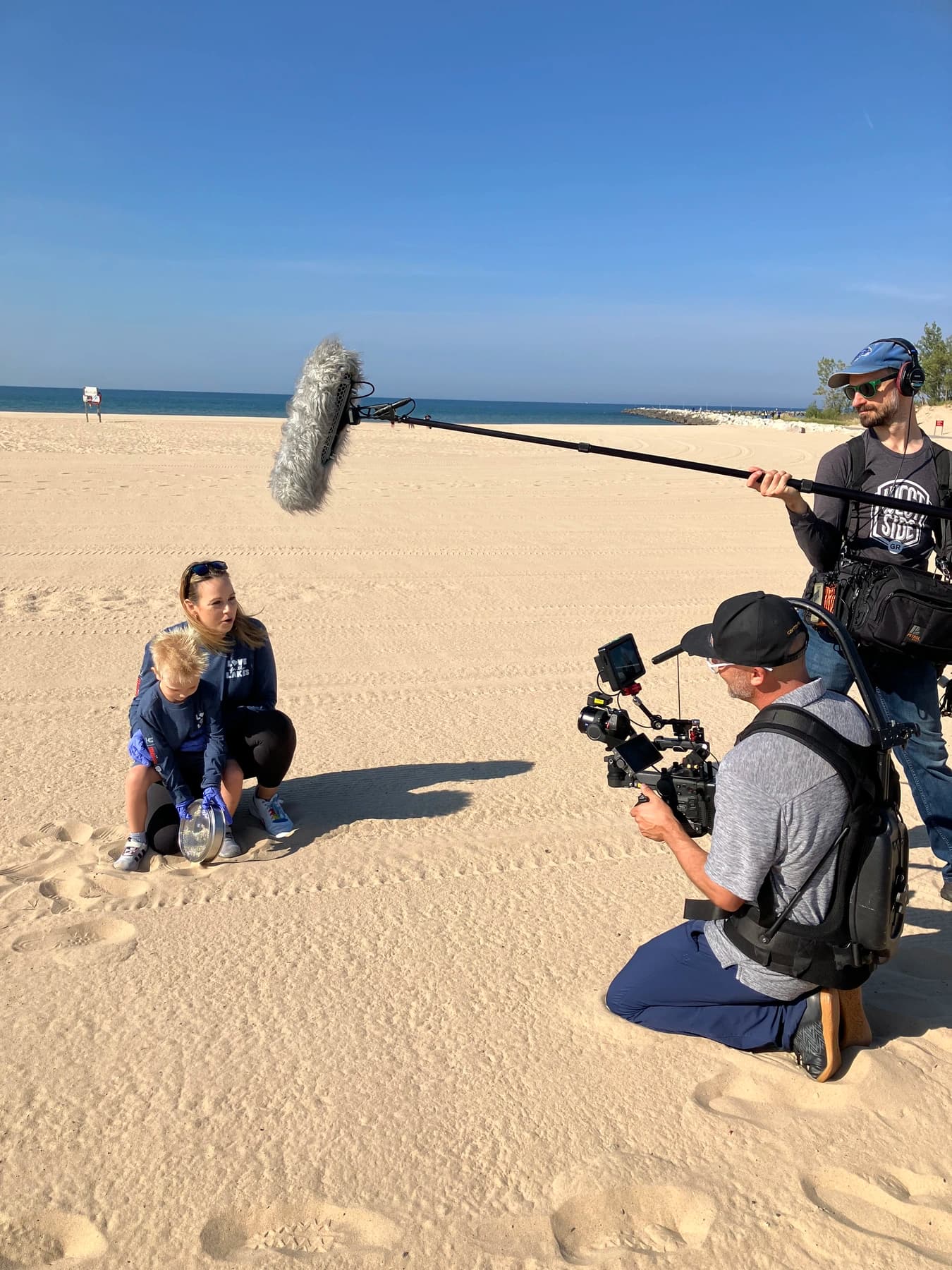
THE SIEVE SHOT
This was the heart of the campaign. It is not just about what got cleaned up. It is about showing the next generation why it matters, and letting that little face carry the hope, trust, and example forward.
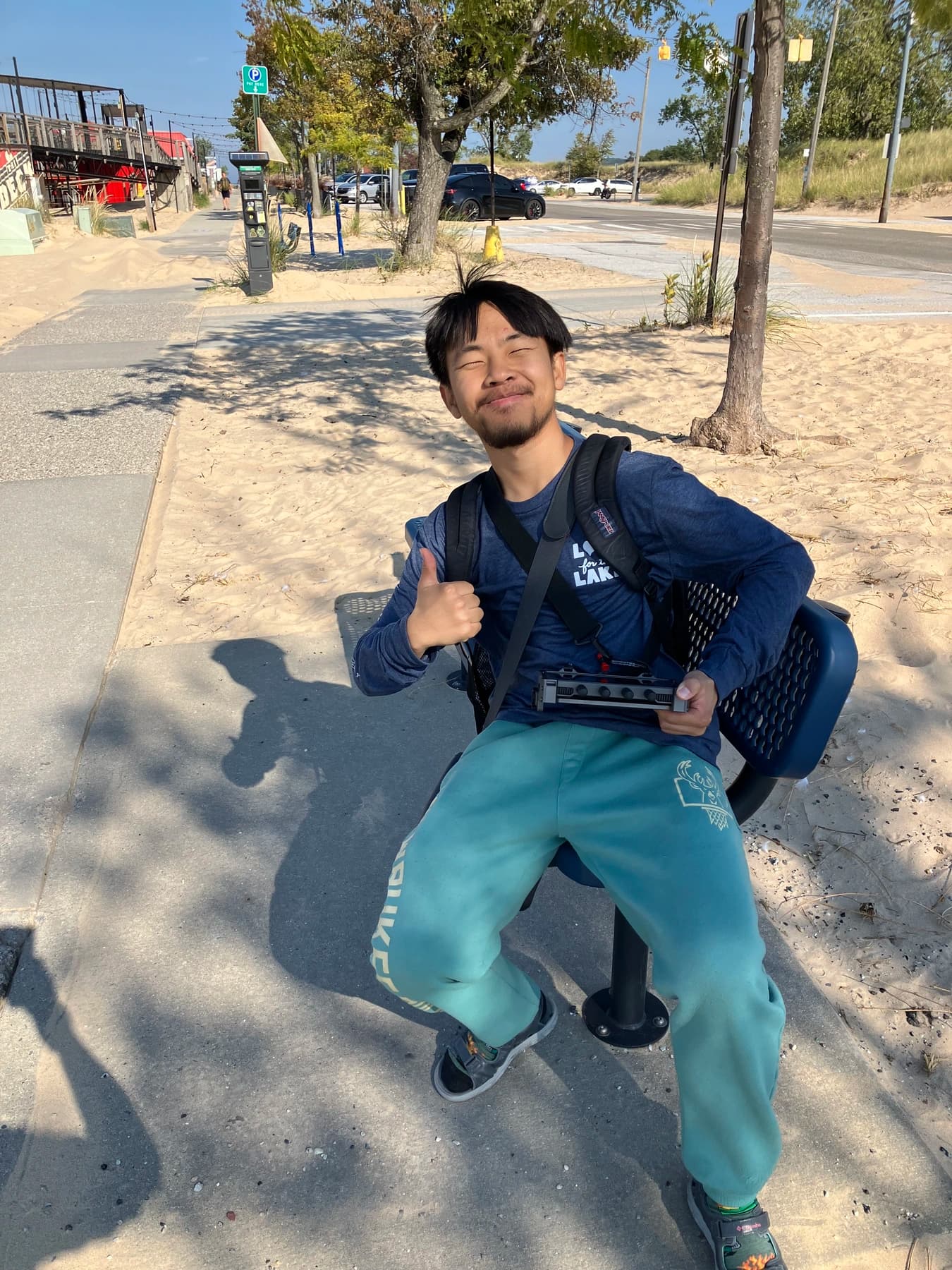
LEAN AND READY
We keep the crew light on purpose. It lets us move fast, stay nimble, and cover more ground without turning the day into a circus.
Corporate Video Pre-Production Checklist for West Michigan Teams
Use our pre-production checklist to plan interviews, locations, approvals, timelines, and deliverables before your corporate video shoot.
What Should Be in a Video Production Brief?
A strong video production brief gives the creative team the audience, goal, message, guardrails, and delivery plan they need to do useful work.
How Event Video Supports ROI After the Event Ends
Event video keeps working after the room clears by extending story, proof, recap, and campaign momentum into future marketing.